
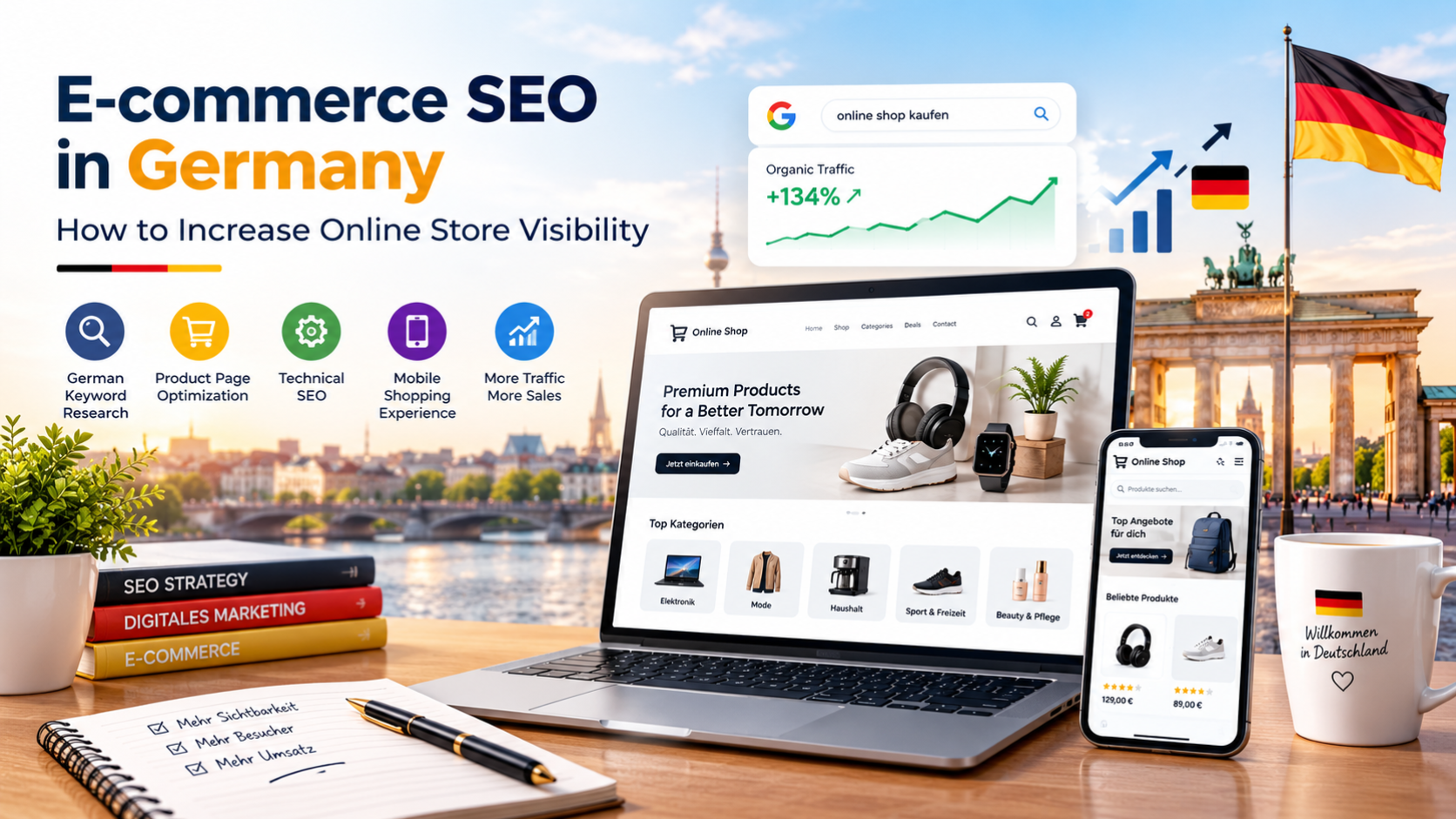
“Germany offers significant opportunities for online retailers, but competition in search results can make it challenging for e-commerce businesses to stand out. Whether you sell fashion, electronics, home products, beauty items, or specialist goods, a well-planned search engine optimization (SEO) strategy can help potential customers discover your online store. E-commerce SEO focuses on improving product pages, category pages, technical website performance, and content so that search engines can understand your store and connect it with relevant searches. For businesses targeting German shoppers, success requires more than translating an existing website. German-language keyword research, accurate product information, a smooth shopping experience, and trustworthy business details all contribute to a stronger online presence.”
Germany offers significant opportunities for online retailers, but competition in search results can make it challenging for e-commerce businesses to stand out. Whether you sell fashion, electronics, home products, beauty items, or specialist goods, a well-planned search engine optimization (SEO) strategy can help potential customers discover your online store. E-commerce SEO focuses on improving product pages, category pages, technical website performance, and content so that search engines can understand your store and connect it with relevant searches. For businesses targeting German shoppers, success requires more than translating an existing website. German-language keyword research, accurate product information, a smooth shopping experience, and trustworthy business details all contribute to a stronger online presence.
1. Research German E-commerce Keywords
Keyword research helps identify the words and phrases shoppers use when searching for products online. German customers may use product names, specifications, brands, and purchase-related terms that differ from English-language searches. For example, an online retailer could investigate terms such as Laufschuhe kaufen (buy running shoes), Kaffeemaschine (coffee machine), or Bürostuhl ergonomisch (ergonomic office chair), depending on its product range. Use keyword research tools to evaluate search intent, competition, and relevant variations. Group keywords by product category and customer needs, then map them to the most appropriate pages.
Recommended actions:
1. Research German-language keywords for every important category. 2. Identify commercial and transactional search intent. 3. Include relevant product attributes, sizes, materials, and model numbers. 4. Avoid unnatural keyword repetition. 5. Review competitor category structures and product descriptions.
2. Optimize Product Pages for Google
Product pages are essential for e-commerce SEO because they help shoppers evaluate products and make purchasing decisions. Write unique product titles and descriptions that explain the item's key features, benefits, specifications, and intended use. Include relevant German keywords naturally, but prioritize clarity and accuracy. Optimize page titles, meta descriptions, image alt text, headings, and product URLs. Display current prices, availability, delivery information, and returns policies accurately. Where applicable, include genuine customer reviews and useful product specifications. Avoid copying manufacturer descriptions across hundreds of pages without adding meaningful information. A well-optimized product page should answer the shopper's main questions and make the next step toward purchase clear.
3. Build SEO-Friendly Category Pages
Category pages help shoppers navigate an online store and allow search engines to understand how products are organized. Use descriptive category names, logical subcategories, clear navigation, and relevant internal links. Add concise introductory content where it genuinely helps customers understand the products available. For example, a German electronics store might organize products into categories for laptops, monitors, accessories, and gaming equipment. Avoid creating excessive filter-based URLs that lead to duplicate or low-value pages. Decide which filtered pages deserve indexing based on search demand and their usefulness to shoppers.
4. Improve Technical SEO for Your Online Store
Technical SEO helps search engines crawl, index, and interpret e-commerce websites correctly. Common areas to review include: 1. XML sitemaps and robots directives. 2. Canonical tags and duplicate product URLs. 3. Faceted navigation and filter parameters. 4. Broken links, redirects, and unavailable products. 5. Mobile usability and HTTPS. 6. Product and breadcrumb structured data. E-commerce platforms can generate many URL variations through filters, sorting, and pagination. Establish a clear indexing strategy so that search engines can focus on useful pages instead of unnecessary duplicates. Test technical changes carefully, particularly when changing URL structures or migrating an online store.
5. Improve Website Speed and Mobile Shopping
Shoppers expect online stores to load quickly and work smoothly on smartphones, tablets, and desktop computers. Slow pages and difficult checkout processes can frustrate users and reduce the likelihood of completing a purchase. Compress product images, serve appropriately sized formats, reduce unnecessary scripts, and review caching and hosting performance. Check Core Web Vitals and identify the most important performance issues. Make product filters, menus, product galleries, shopping carts, and checkout forms easy to use on mobile devices. Keep calls to action visible and make product details readable without excessive scrolling. A fast, accessible shopping experience supports both customer satisfaction and long-term organic search performance.
6. Use Product Images and Structured Data Effectively
High-quality product images help shoppers understand what they are buying. Use clear images with appropriate file sizes and descriptive alt text that accurately describes each image. Implement relevant product structured data using accurate information about product names, prices, availability, brand, and review data where eligible. Keep structured data consistent with visible page content. For eligible products, provide a well-maintained product feed to Google Merchant Center to support product discovery across relevant Google shopping experiences. Structured data and feeds do not guarantee enhanced search appearances, but accurate implementation helps platforms interpret product information.
7. Build Trust with German Shoppers
Trust is an important part of the online shopping experience. Make essential business and purchase information easy to find, including contact details, shipping conditions, return policies, payment methods, and customer support options. For stores serving Germany, review applicable German and European consumer protection, privacy, accessibility, and e-commerce requirements with qualified professionals. Depending on the business, requirements may include a legally compliant Impressum, privacy information, transparent pricing, and clear cancellation or withdrawal information. Avoid misleading claims, fake reviews, hidden charges, or unclear delivery conditions. Accurate information helps customers make informed decisions and supports a more credible online presence.
8. Create Useful Content to Attract Buyers
Content marketing can bring shoppers to your store before they are ready to purchase. Publish buying guides, product comparisons, sizing advice, care instructions, tutorials, and answers to common questions. For example, a furniture store could publish a guide to choosing an ergonomic office chair, while a beauty retailer could explain how to select products for different skin needs. Connect relevant articles to product and category pages through useful internal links. Update older content when products, specifications, or customer needs change. Focus on helping readers make informed decisions rather than producing repetitive articles solely to target keywords.
9. Optimize for German Local and International Markets
If your business serves customers in specific German cities or regions, local SEO may help people discover relevant services, showrooms, or pickup locations. Maintain accurate business information and an eligible Google Business Profile where appropriate. Create location-specific pages only when they provide genuine value, such as details about a real store, local services, or regional delivery options. For retailers targeting Germany alongside other countries, international SEO can help search engines understand language and country variations. Use a consistent URL structure, localized content, and hreflang annotations where appropriate. Do not assume every German online store needs local SEO or separate country pages. Choose the structure that reflects the actual business model and target markets.
10. Measure E-commerce SEO Performance
SEO performance should be connected to meaningful business outcomes rather than rankings alone. Use Google Search Console to review search impressions, clicks, queries, and indexing information. Use analytics and e-commerce reporting to understand product discovery, add-to-cart actions, completed purchases, and revenue where measurement is properly configured. Review performance by product category, landing page, device, and German search query. Identify pages that attract impressions but few clicks, and pages that receive organic visits but fail to convert. Use this information to prioritize product improvements, update content, resolve technical issues, and refine the shopping journey
Common E-commerce SEO Mistakes to Avoid
Online stores can lose opportunities through duplicate product descriptions, missing metadata, poorly structured categories, slow mobile pages, incorrect canonical tags, and unnecessary indexed filter URLs. Other common problems include ignoring German search intent, using misleading product information, neglecting unavailable-product pages, and publishing content without a clear purpose. Review your website regularly and prioritize changes that improve both search engine understanding and the customer experience.
How Seyfert Infotech Can Support Your E-commerce Growth
Seyfert Infotech provides website development and digital solutions that can help businesses build, improve, and maintain their online presence. A practical e-commerce SEO project can include a website audit, German keyword research, product and category optimization, technical SEO improvements, responsive design, structured data implementation, and ongoing performance monitoring. The right strategy depends on your platform, product catalogue, competition, and target audience. A tailored plan helps identify the improvements most likely to support your store's visibility and business goals.
Conclusion
E-commerce SEO in Germany requires a combination of German-language keyword research, helpful product content, technically sound category structures, fast mobile experiences, accurate product information, and continuous performance analysis. By making your online store easier to discover, understand, and navigate, you can build a stronger foundation for attracting relevant shoppers and supporting sustainable e-commerce growth. Ready to improve your online store's visibility? Explore Seyfert Infotech's website development and digital solutions to identify opportunities for your e-commerce business.
What is e-commerce SEO in Germany?
E-commerce SEO in Germany is the process of improving an online store's visibility for relevant searches made by German shoppers. It includes German keyword research, product optimization, technical SEO, category structure, and website usability.
How can I improve my online store's Google rankings in Germany?
Start with German keyword research, unique product descriptions, useful category pages, mobile performance, technical SEO, internal linking, and accurate product information. Track results and improve pages based on performance data.
Is German-language content important for e-commerce SEO?
Yes, when targeting German-speaking shoppers. Natural German content helps align product pages with local search intent and makes product information easier for customers to understand.
Does product structured data help e-commerce SEO?
Structured data helps search engines interpret product information and may make pages eligible for enhanced search appearances. Eligibility does not guarantee that enhanced results will be displayed.
How long does e-commerce SEO take to show results?
Timelines vary according to competition, website condition, catalogue size, content quality, and the improvements implemented. SEO typically requires ongoing work and performance monitoring over several months.
Should German online stores create separate pages for every city?
Not necessarily. City pages are useful when they provide genuine local information or support real services. Creating repetitive pages solely to target location keywords can provide little value to customers.
How can I measure e-commerce SEO success?
Track organic clicks, search impressions, relevant landing-page traffic, add-to-cart activity, purchases, conversion rate, and revenue where measurement is available. Combine search data with business metrics for a clearer picture of performance.