
“Technical SEO problems are one of the most common reasons a website struggles to rank on Google. Issues such as broken links, missing meta tags, incorrect redirects, duplicate pages, blocked resources, poor URL structure, and crawl errors can prevent search engines from understanding your website properly. A technically healthy website makes it easier for Google to crawl, index, and rank important pages. Regular SEO audits can help identify these issues early and improve the overall search performance of your website.”
Your Website Has Technical SEO Issues
Technical SEO problems are one of the most common reasons a website struggles to rank on Google. Issues such as broken links, missing meta tags, incorrect redirects, duplicate pages, blocked resources, poor URL structure, and crawl errors can prevent search engines from understanding your website properly. A technically healthy website makes it easier for Google to crawl, index, and rank important pages. Regular SEO audits can help identify these issues early and improve the overall search performance of your website.
Your Content Does Not Match Search Intent
Creating content is not enough if it does not answer what users are actually searching for. Search intent refers to the reason behind a search query, such as finding information, comparing services, buying a product, or contacting a business. If your page content does not clearly match the user’s intent, Google may prefer other websites that provide a more relevant answer. Focus on creating useful, clear, and well-structured content that directly solves the searcher’s problem.
Your Website Content Is Thin or Outdated
Pages with very little useful information may struggle to compete in search results. Thin content often lacks depth, examples, supporting information, FAQs, or enough explanation to satisfy visitors. Outdated content can also reduce your competitiveness, especially in industries where information changes regularly. Updating existing pages with current information, better explanations, new examples, and relevant keywords can improve their ranking potential.
Your Website Is Slow and Performs Poorly
Website speed plays an important role in both user experience and SEO. Visitors are more likely to leave a website that takes too long to load, especially on mobile devices. Large images, unnecessary scripts, poor hosting, excessive plugins, and unoptimized code can slow down your website. Improving loading speed, image optimization, caching, and Core Web Vitals can help create a better experience for users and search engines.
Your On-Page SEO Is Not Properly Optimized
On-page SEO helps Google understand the topic and purpose of each page. Poorly optimized title tags, missing headings, weak meta descriptions, keyword stuffing, and improper internal linking can reduce the visibility of your content. Each important page should have a clear SEO title, one main H1 heading, useful H2 and H3 headings, relevant keywords, optimized images, and natural internal links. Good on-page SEO makes your content easier to understand and more useful to both users and search engines.
Your Website Lacks Authority and Quality Backlinks
Backlinks from trustworthy websites can help Google understand that your website is credible and valuable. A website with little authority may find it difficult to compete against established competitors, even if its content is good.Instead of focusing on the number of backlinks, focus on quality and relevance. Useful content, business directories, industry mentions, guest contributions, partnerships, and digital PR can help attract stronger links over time.
Your Website Is Not Optimized for Mobile and Local Search
Most users now browse websites through mobile devices, so poor mobile usability can directly affect engagement and conversions. Small text, difficult navigation, slow loading, and layouts that do not adapt properly to different screen sizes can create a negative experience. For local businesses, weak local SEO can also limit visibility. Optimizing your Google Business Profile, maintaining consistent business information, using location-based keywords, and collecting genuine customer reviews can improve local search performance.
Conclusion
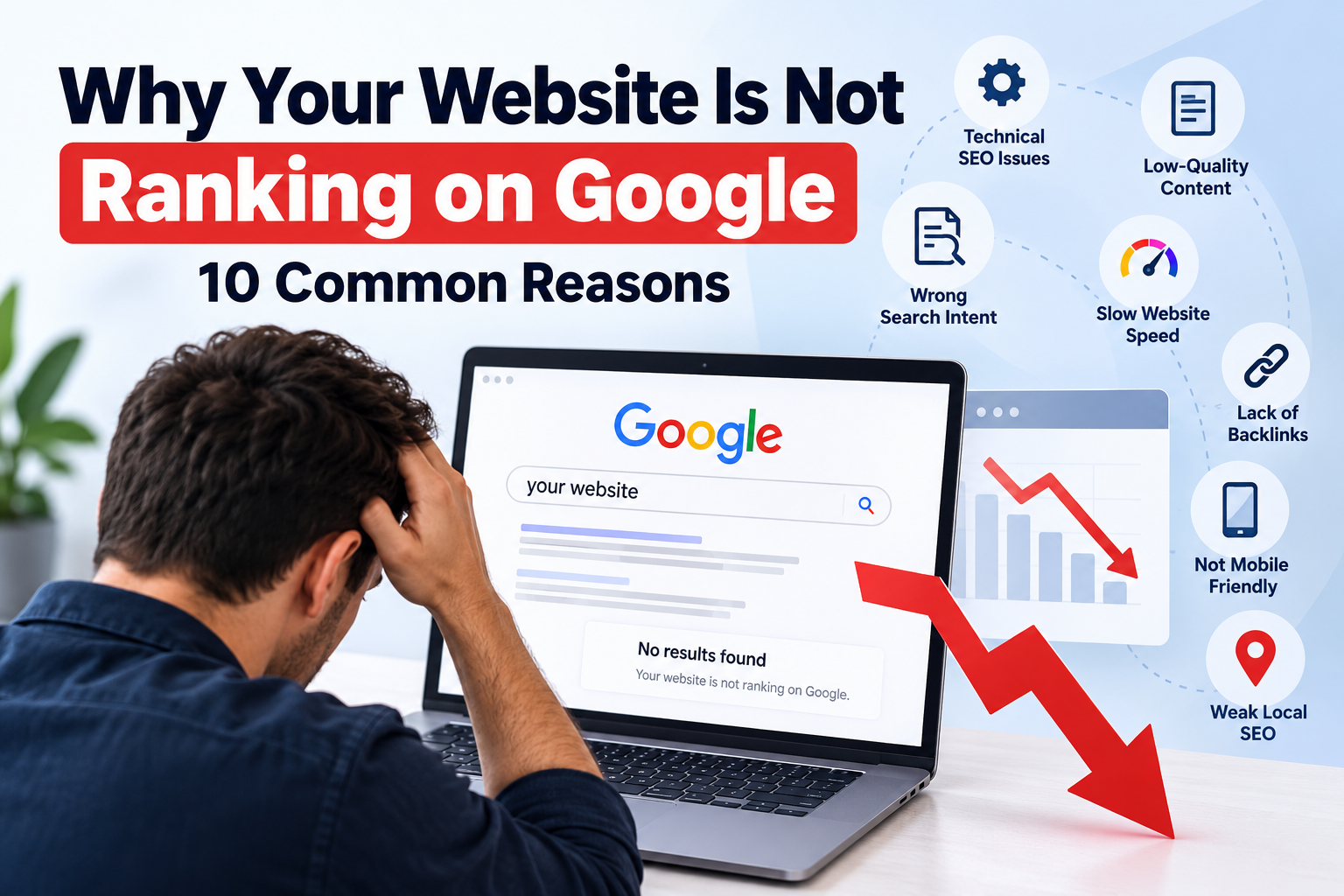
If your website is not ranking on Google, the problem is usually not caused by one single factor. Technical SEO, content quality, search intent, website speed, mobile usability, backlinks, on-page optimization, and local SEO all work together to influence search visibility. Start by auditing your website, fixing technical problems, improving important pages, updating outdated content, and creating a better experience for visitors. Consistent SEO improvements can gradually increase your website’s visibility, organic traffic, leads, and long-term ranking performance.