
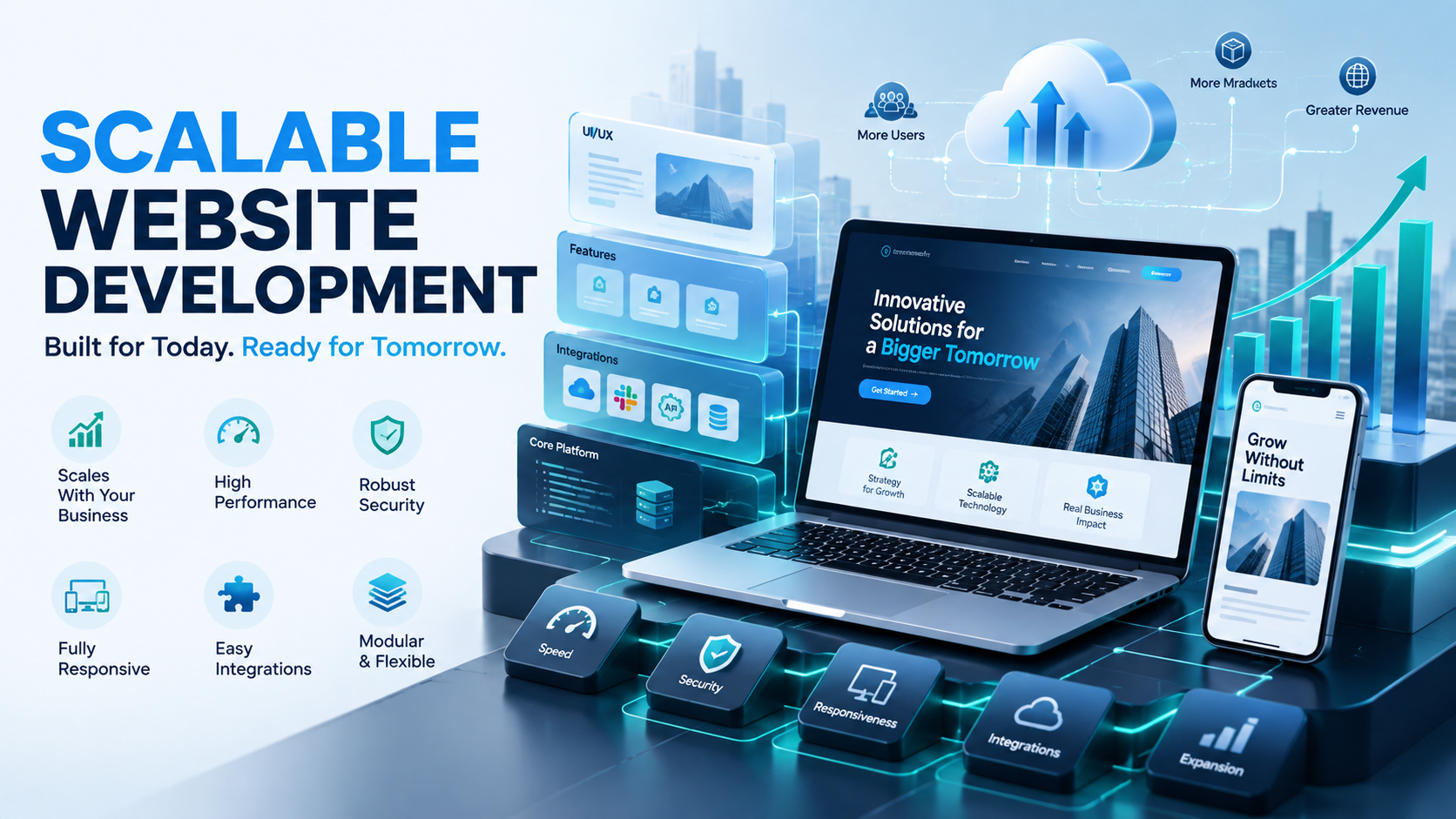
“A visually attractive website can create a strong first impression, but design alone is not enough to support long-term business growth. As businesses grow, their digital requirements also change. A simple website may later need new services, additional pages, customer portals, payment systems, CRM integrations, booking features, dashboards or mobile application connectivity. If the website is not built with scalability in mind, even small changes can become difficult, expensive and time-consuming. A scalable website is designed to grow along with the business while maintaining performance, security and usability.”
A visually attractive website can create a strong first impression, but design alone is not enough to support long-term business growth. As businesses grow, their digital requirements also change. A simple website may later need new services, additional pages, customer portals, payment systems, CRM integrations, booking features, dashboards or mobile application connectivity. If the website is not built with scalability in mind, even small changes can become difficult, expensive and time-consuming. A scalable website is designed to grow along with the business while maintaining performance, security and usability.
A Good-Looking Website Is Not Always a Good Business Website
Understanding Website Scalability
Website scalability refers to the ability of a website or web application to handle growth without requiring a complete rebuild. Growth can happen in different ways. A business may receive more website visitors, add new products, expand services, open new locations or introduce additional digital features. A scalable website architecture makes these changes easier to implement. Instead of creating temporary solutions, businesses can build a strong technical foundation that supports future expansion.
Scalable Websites Support Business Growth
A business website should be able to evolve as the company grows. For example, a small service website may initially contain only a few pages and a contact form. Later, the business may need online booking, customer login, payment integration, CRM connectivity, automated enquiries or multiple service locations. When scalability is considered from the beginning, these features can be added more efficiently. This helps businesses avoid unnecessary redesigns and repeated development costs.
Performance Matters as Traffic Increases
A website may work well when it receives a small number of visitors, but performance can change as traffic grows. Slow page loading, overloaded servers and poorly optimized code can affect user experience. Scalable website development focuses on clean code, optimized databases, efficient APIs, caching, image optimization and suitable hosting infrastructure. This helps websites maintain stable performance even when visitor numbers increase.
Flexible Website Architecture Makes Updates Easier
A website should be easy to manage and improve. Poorly structured websites often make simple changes difficult. A flexible architecture separates different parts of the website so developers can update features without affecting the entire system. For example, businesses should be able to add new services, pages, integrations and modules without rebuilding the complete website. This flexibility makes long-term website management easier.
Responsive Design Is Part of Scalability
Modern customers access websites through smartphones, tablets, laptops and desktop computers. A scalable website should provide a consistent experience across all these devices. Responsive website development ensures that layouts, menus, forms, images and buttons adapt correctly to different screen sizes. As new devices and screen resolutions continue to appear, responsive design helps businesses provide a reliable experience without creating separate websites for every device.
Scalable Websites Make Integrations Easier
Modern businesses often depend on multiple digital tools. A website may need to connect with CRM software, payment gateways, accounting platforms, email systems, analytics tools, social media, customer support platforms or custom applications. A scalable website should be developed with integration possibilities in mind. Using APIs and structured development practices makes it easier to connect new systems when business requirements change.
Security Should Grow with the Website
As a website becomes larger and handles more users, security becomes increasingly important. Business websites may store customer information, login credentials, enquiry data, payment details and other sensitive information. Scalable website development should include secure authentication, database protection, input validation, access control, regular updates and secure API connections. Security should be part of the website architecture from the beginning rather than added only after problems appear.
SEO Benefits from Strong Website Structure
Website scalability also supports long-term SEO. As businesses add new services, products, locations or blog content, the website structure should remain clear and organised. Clean URLs, proper heading structure, internal linking, fast performance and mobile responsiveness help search engines understand website content. A well-structured website makes it easier to expand content without creating confusing navigation or duplicate pages.
Custom Development Provides Greater Flexibility
Template-based websites can be useful for simple requirements, but growing businesses may eventually need more flexibility. Custom website development allows businesses to build features based on their exact workflow. This can include custom dashboards, booking systems, product management, customer portals, lead management, reporting tools and other business-specific functionality. A custom scalable solution gives businesses greater control over future development.
Scalable Websites Reduce Long-Term Development Costs
A website that cannot adapt to new requirements may need frequent redesigns or complete redevelopment. This increases both time and cost. A scalable development approach reduces the need for repeated rebuilding by creating reusable components, modular features and flexible architecture. Businesses can then invest in improvements gradually rather than replacing the entire system whenever requirements change.
What is a scalable website?
A scalable website is designed to handle increasing traffic, content, features and integrations without requiring a complete rebuild.
Can an existing website be made scalable?
Yes. Existing websites can be reviewed and improved through better architecture, database optimization, code restructuring and performance improvements.
Does website scalability improve performance?
A properly designed scalable architecture can help websites maintain better performance as traffic and functionality increase.
Are custom websites more scalable than templates?
Custom development can provide greater flexibility because the architecture and features can be designed around specific business requirements.
How does Seyfert Infotech build scalable websites?
Seyfert Infotech develops websites and custom web solutions with a focus on responsive design, performance, security, maintainability and future business expansion.
A successful business website should not only look good today. It should be ready to support the business tomorrow.