
“A business website is no longer just an online brochure. In 2026, customers expect websites to load quickly, work smoothly on mobile devices, provide secure experiences, and support features such as online enquiries, payments, automation, and AI-powered interactions. Choosing the right web technology helps businesses improve website speed, scalability, security, and user experience. A well-planned technology stack also makes future updates easier and reduces long-term maintenance costs. Businesses should select technologies based on their goals, expected traffic, functionality, budget, and future growth plans rather than simply choosing what is currently popular.”
Why Choosing the Right Web Technology Matters in 2026
A business website is no longer just an online brochure. In 2026, customers expect websites to load quickly, work smoothly on mobile devices, provide secure experiences, and support features such as online enquiries, payments, automation, and AI-powered interactions. Choosing the right web technology helps businesses improve website speed, scalability, security, and user experience. A well-planned technology stack also makes future updates easier and reduces long-term maintenance costs. Businesses should select technologies based on their goals, expected traffic, functionality, budget, and future growth plans rather than simply choosing what is currently popular.
HTML5, CSS3 and JavaScript Remain the Core Technologies
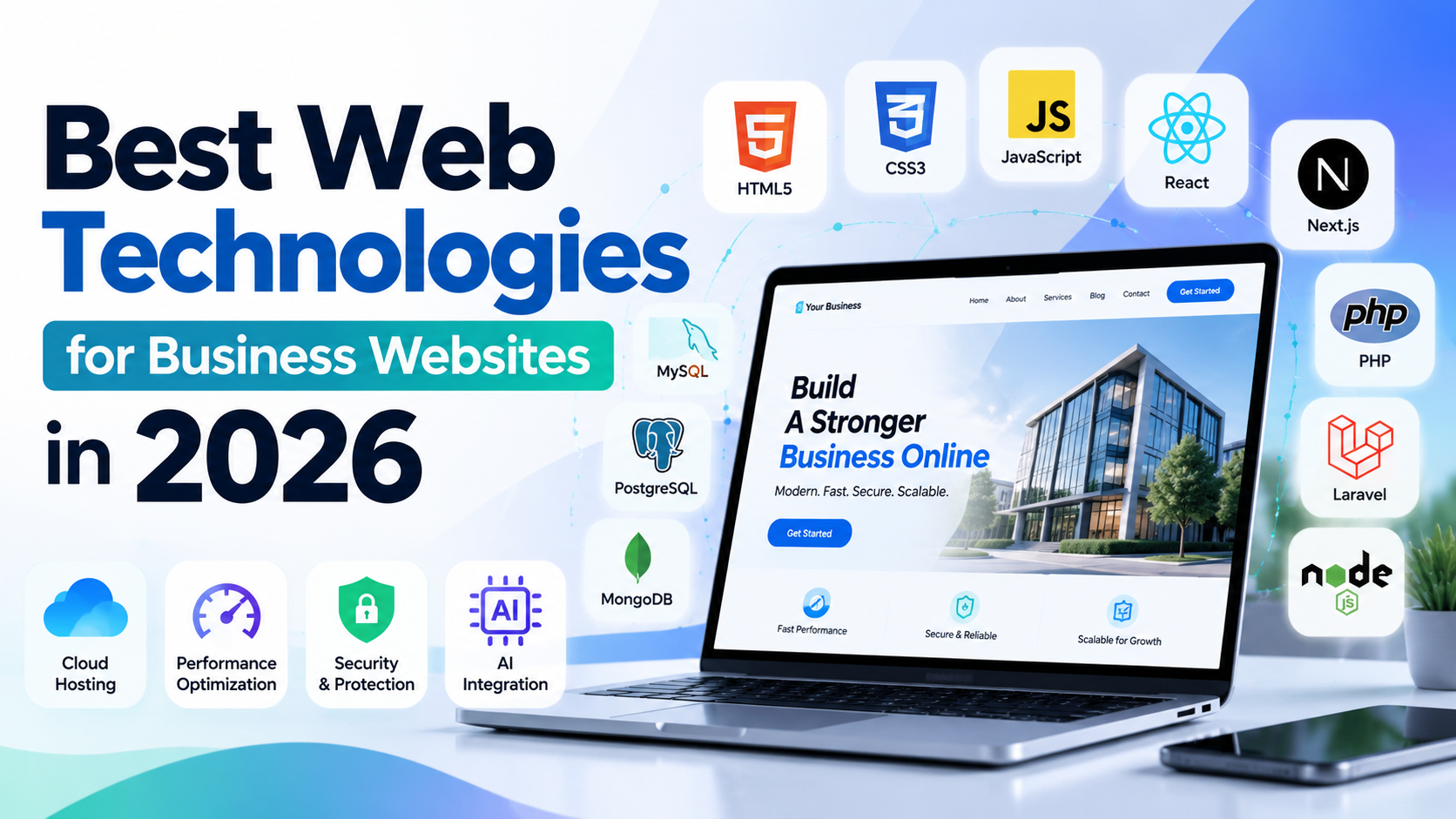
HTML5, CSS3, and JavaScript continue to form the foundation of modern websites. HTML structures the content, CSS controls the design and responsiveness, while JavaScript adds interactive features and dynamic functionality. Modern CSS features such as Grid, Flexbox, responsive layouts, and animations allow developers to build visually attractive websites that perform well across desktops, tablets, and smartphones. JavaScript also supports advanced functionality such as interactive forms, dynamic content loading, animations, API integrations, and real-time website features.
React and Next.js for Fast and Modern Business Websites
React remains one of the most widely used frontend technologies for building interactive web applications. It allows developers to create reusable components, making website development faster and easier to maintain. Next.js extends React with features such as server-side rendering, static generation, routing, performance optimization, and improved search engine visibility. For businesses that require fast-loading websites, scalable applications, customer portals, dashboards, or advanced digital platforms, React and Next.js can be excellent choices in 2026
PHP and Laravel for Reliable Business Web Applications
PHP continues to be a practical and widely supported technology for business websites and web applications. It is commonly used for content management systems, business portals, ecommerce platforms, and custom software solutions. Laravel is a powerful PHP framework that provides a structured development approach with built-in features for authentication, routing, database management, security, and APIs. Businesses looking for custom CRM systems, admin panels, booking platforms, ecommerce websites, or enterprise applications can benefit from Laravel's flexibility and scalability.
Node.js for Real-Time and Scalable Applications
Node.js allows developers to use JavaScript on the server side and is especially useful for applications requiring fast communication and real-time updates. It is commonly used for live chat systems, notification platforms, collaboration tools, APIs, dashboards, and other applications that process multiple requests efficiently. Businesses planning highly interactive web applications or systems that require frequent data updates can consider Node.js as part of their technology stack.
Modern Databases and Cloud Technologies
Databases play an important role in storing and managing website information such as customer accounts, products, enquiries, orders, and business data. MySQL remains a dependable option for many business websites, while databases such as PostgreSQL and MongoDB can be suitable for applications with more specialized requirements. Cloud platforms, content delivery networks, automated backups, and scalable hosting solutions also help businesses improve website availability, speed, data protection, and performance.
AI, Security and Performance Technologies for Modern Websites
Business websites in 2026 are increasingly integrating AI-powered tools such as chatbots, recommendation systems, automated customer support, intelligent search, and content personalization. At the same time, website security remains essential. SSL certificates, secure authentication, regular updates, firewalls, backups, and secure coding practices help protect both business and customer data. Performance technologies such as image optimization, caching, lazy loading, CDN integration, and Core Web Vitals optimization can also improve user experience and search visibility.
Conclusion
The best web technologies for business websites in 2026 depend on the purpose and complexity of the project. HTML, CSS, JavaScript, React, Next.js, PHP, Laravel, Node.js, modern databases, cloud platforms, and AI tools each offer different advantages. Businesses should focus on building websites that are fast, secure, mobile-friendly, scalable, and easy to maintain. Selecting the right technology stack with an experienced web development team can help create a future-ready website that supports long-term digital growth.