
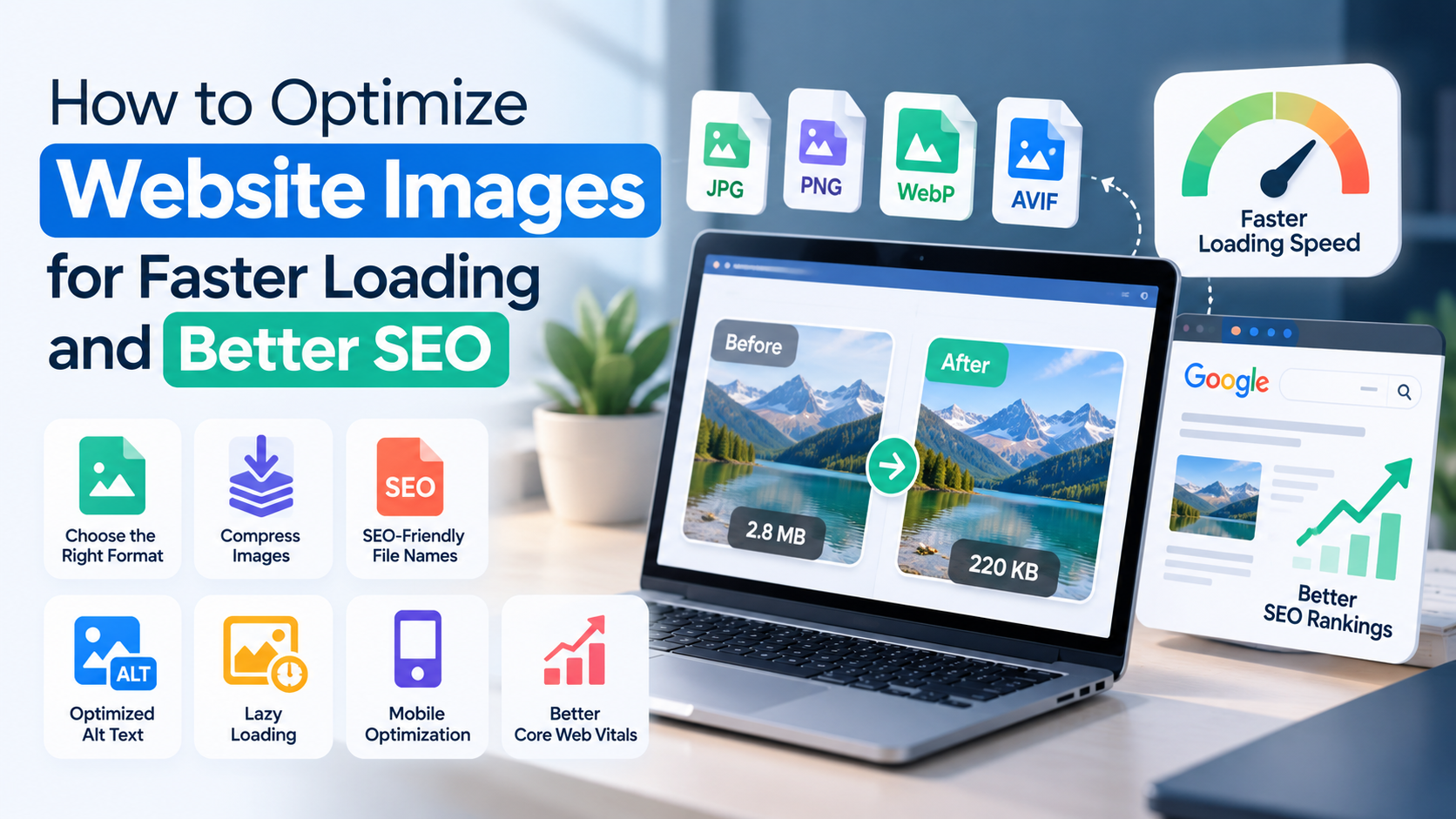
“Selecting the correct image format is essential for improving website speed. Modern formats like WebP and AVIF provide efficient compression while maintaining good image quality. JPEG works well for photographs, PNG is useful for images requiring lossless quality, and SVG is suitable for logos and icons. Using appropriate formats reduces image file sizes and helps websites load more efficiently”
Choose the Right Image Format
Selecting the correct image format is essential for improving website speed. Modern formats like WebP and AVIF provide efficient compression while maintaining good image quality. JPEG works well for photographs, PNG is useful for images requiring lossless quality, and SVG is suitable for logos and icons. Using appropriate formats reduces image file sizes and helps websites load more efficiently
Compress Images to Improve Website Loading Speed
Large image files can increase page loading times and affect website performance. Compressing images before uploading them helps reduce file sizes without significantly affecting visual quality. Tools such as TinyPNG, Squoosh, and ImageOptim can help optimize images. Proper image compression improves loading speed, reduces bandwidth consumption, and creates a smoother browsing experience.
Use SEO-Friendly Image File Names
Descriptive image file names help search engines understand the content of website images. Instead of using generic names like IMG123.jpg, use meaningful filenames such as website-image-optimization.webp or responsive-web-design.webp. Keep filenames short, descriptive, and relevant to the image. This simple SEO practice can improve image discoverability in Google Images and provide additional context to search engines.
Add Optimized Alt Text for Better Image SEO
Alt text is an important part of website accessibility and image SEO. It describes images for users who cannot see them and helps search engines understand visual content. Write clear, meaningful descriptions that accurately represent each image. Include relevant keywords naturally when appropriate, but avoid keyword stuffing. Well-written alt text supports accessibility and helps improve image relevance in search results.
Implement Lazy Loading for Faster Website Performance
Lazy loading is a technique that delays loading images until they are needed. Instead of downloading every image immediately, browsers can load images as visitors scroll through the page. This reduces unnecessary data usage and can improve initial page loading performance. Lazy loading is especially useful for blogs, portfolios, and e-commerce websites. However, important images visible immediately, such as the main hero image, should generally not be lazy-loaded.
Optimize Images for Mobile-Friendly Websites
Mobile optimization is essential because many users browse websites using smartphones and tablets. Large desktop images can consume unnecessary mobile data and affect loading performance. Using responsive images with HTML attributes such as srcset and sizes allows browsers to select suitable image dimensions. Properly optimized mobile images improve page speed, provide a better user experience, and support mobile-friendly website development.
Improve Core Web Vitals and Google Rankings
Image optimization contributes to better website performance and Core Web Vitals. Large images can delay Largest Contentful Paint (LCP), while images without defined dimensions can cause Cumulative Layout Shift (CLS). Compressing images, setting appropriate dimensions, and prioritizing important visual content can help improve these metrics. Google PageSpeed Insights can identify image-related performance issues. Better Core Web Vitals support user experience and can contribute to search ranking performance, although they do not guarantee higher rankings.
Conclusion
Optimizing website images is an important step in creating faster, more responsive, and SEO-friendly websites. Choosing suitable image formats, compressing files, adding descriptive alt text, implementing lazy loading, and improving mobile performance can significantly enhance the browsing experience. At Seyfert Infotech, we focus on building high-performance, SEO-friendly websites that help businesses strengthen their online presence, improve website usability, and reach more potential customers.