
In the fast-paced world of startups, speed is often prioritized over structure.
Why Startups Should Build a Design System Before Hiring Their Third Developer
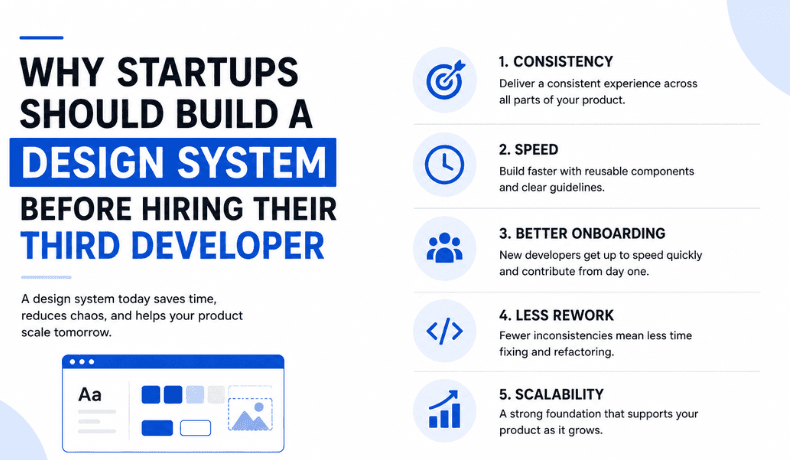
In the fast-paced world of startups, speed is often prioritized over structure. Founders and early development teams focus on launching products quickly, validating ideas, and acquiring customers. However, as the product grows, inconsistencies in design and development can create significant challenges. This is why startups should consider building a design system before hiring their third developer. A well-defined design system establishes a shared language for designers and developers, ensuring consistency, improving efficiency, and creating a scalable foundation for future growth.
A design system is more than just a collection of UI components. It includes design principles, typography, color palettes, spacing guidelines, reusable components, and development standards that help teams build products faster and more consistently. When startups invest in a design system early, new developers can onboard quickly and contribute effectively without spending time deciphering different design patterns or coding styles. This reduces technical debt and prevents the product from becoming a patchwork of inconsistent user experiences.
One of the biggest benefits of a design system is increased development speed. Instead of creating buttons, forms, navigation elements, and layouts from scratch for every feature, developers can leverage pre-built, reusable components. This accelerates product development while maintaining visual and functional consistency across the platform. As startups scale their teams, a design system ensures that every new feature aligns with the brand and user experience standards established from the beginning.
Consistency is another critical advantage. Users expect a seamless experience across every page and interaction. Without a design system, different developers may implement components in slightly different ways, leading to confusion and a fragmented interface. A centralized design system eliminates these discrepancies, helping startups deliver a professional, trustworthy product that enhances customer satisfaction and brand recognition.
From a business perspective, a design system also reduces long-term costs. Maintaining multiple versions of similar components requires additional development and testing effort. By standardizing design and code, startups can focus resources on innovation and feature development rather than fixing inconsistencies. This efficiency becomes increasingly valuable as the company grows and the product becomes more complex.
Modern startups are also embracing component-based frameworks such as React, Next.js, and Vue.js, making design systems even more relevant in 2025. These technologies thrive on reusable components and modular architecture, allowing teams to build scalable applications while maintaining high performance and consistency. A strong design system complements these frameworks by providing a structured approach to development and design collaboration.
Ultimately, building a design system before hiring the third developer is an investment in scalability, efficiency, and product quality. It helps startups establish clear standards, accelerate development, reduce technical debt, and create a cohesive user experience. As competition continues to increase in the digital landscape, startups that prioritize design systems early will be better positioned to scale their teams, products, and customer base with confidence.