
As schools continue to embrace digital transformation in 2025, choosing the right School ERP system has become a critical decision for principals and administrators.
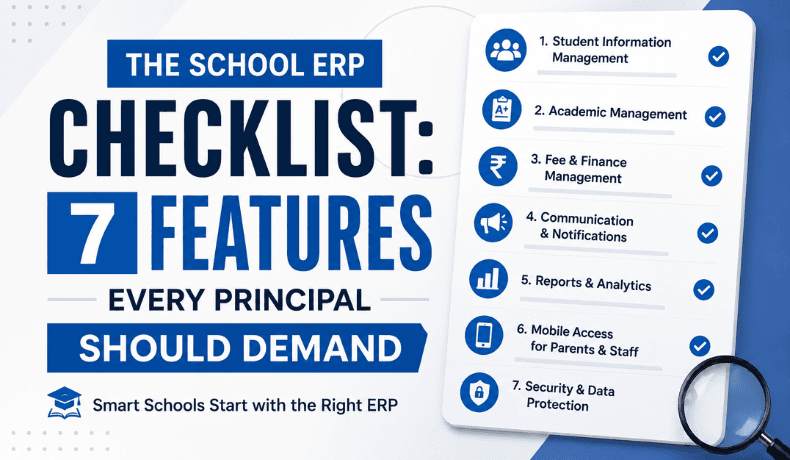
The School ERP Checklist: 7 Features Every Principal Should Demand
As schools continue to embrace digital transformation in 2025, choosing the right School ERP system has become a critical decision for principals and administrators. A well-designed School ERP streamlines daily operations, improves communication, enhances academic management, and reduces administrative workload. However, not all ERP solutions are created equal. Before investing in a platform, school leaders should ensure it includes essential features such as student information management, attendance tracking, fee collection, examination management, parent communication, staff administration, and data security. These capabilities help schools operate more efficiently while providing a better experience for students, teachers, and parents.
One of the most important features of a School ERP is centralized student information management, which allows administrators to store and access student records, academic performance, attendance history, and personal details from a single dashboard. Automated attendance and leave management systems help schools track student and staff attendance accurately while keeping parents informed through real-time notifications. Fee and financial management modules simplify payment collection, generate invoices, and provide detailed financial reports, reducing manual work and improving transparency.
Effective communication is another key requirement. Modern School ERP platforms offer parent portals, mobile applications, SMS alerts, and email notifications that strengthen collaboration between schools and families. Academic management features such as examination scheduling, grade tracking, report card generation, and performance analytics enable educators to monitor student progress more effectively. Additionally, staff and human resource management tools help schools manage payroll, employee records, leave requests, and performance evaluations from a centralized system.
Security and accessibility should also be top priorities when selecting a School ERP solution. Cloud-based platforms with mobile access allow administrators, teachers, students, and parents to access important information anytime and from anywhere. Strong security measures such as data encryption, role-based permissions, secure backups, and compliance with data protection standards ensure that sensitive information remains protected. By choosing a School ERP that includes these seven essential features, principals can improve operational efficiency, enhance communication, support academic excellence, and prepare their institutions for future growth in an increasingly digital education environment.